Here’s a link to my autoethnography on Korean Culture hope you guys enjoy reading it!
Autoethnography Analysis
My primary research is definitely on a personal level compared with secondary research. Since one of my primary research sources is my parents, it’s more of a connection between family and their experiences. Secondary research is more statistics, so it’s numbers and facts and whatnot.
My primary research yields somewhat similar results based on topics that are both talked about in primary and secondary research. Information such as foods or customs practiced are the same.
My primary research fills the pathos element of my essay as secondary research is only really to provide statistics and facts.
It proves that certain standards that Koreans hold are true and there are customs/traditions that exist are taught for generations.
There is some overlap as since both of my parents grew up in South Korea, so some information they shared about what they did in their households were similar.
There were slight discrepancies as women and men are treated differently in households in Korean culture, since they served different roles within their families as well.
I didn’t have any outliers since everything was pretty straightforward.
Although I didn’t take a survey, I conducted multiple interviews amongst Korean peers around my age to see how our parents may differ in traditional methods in the ways they raised us. They weren’t really suprising, and the only differences seemed to be the strictness of our parents, whilst the cultures remained the same.
Some of the conclusions I can draw are that life in Korea and America for Koreans are quite different. Although that the traditions and cultures remain the same in both countries, the schooling systems are much different in Korea than America. Additionally, I have learned more about the roots of where I came from, and how my parents and friends have grown up similarly to the ways in which I was raised. However, life in Korea still remains much more traditional than life in America so customs and traditions are taken much more seriously there.
The only questions that still remain are how these traditions came about, and why it seems so important to continue them down to our future generations. Also, why some parents choose to do the traditional methods differently compared with my other friends, as none of us were raised the exact same ways.
No new questions have arisen as a result of my research, but questions I have been wondering for a while have gotten answered.
Korean Knowledge
Although not the same emotional effect as primary research, secondary research is equally as important. Up until now, I have mainly only known what my parents have told me about what South Korea was like a couple decades ago. However, I was intrigued as what to Korea was like around the time my grandparents lived there, around 70 years ago.
An interesting factoid I had already known was that my grandparents lived in Korea back before the country was split into North and South.

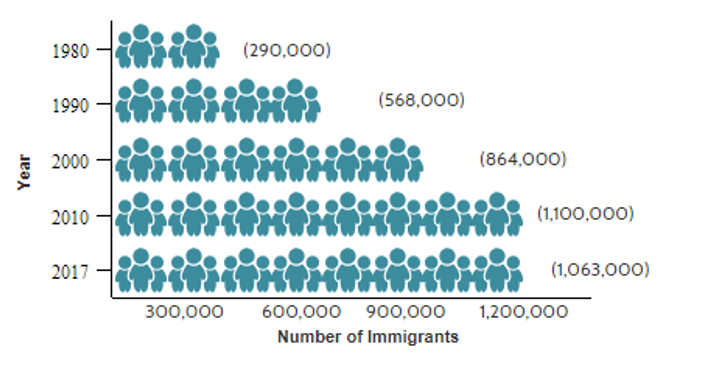
Both of my parents have immigrated from South Korea into the United States, as just last week my father celebrated 30 years living in the United States. I though this was interesting so I asked him why he moved. Although he had his own reasons, one could say that it’s due to the growing relations between the two countries. According to a source, “Since the 1960s, immigration from the Korean peninsula to the United States has increased dramatically, driven by political, economic, and military relations between South Korea and the United States.”
Although this applies much more to my extended family, religion is an important part of Koreans’ lives. In South Korea, “Confucianism, Buddhism, and Christianity are the main formal religions.” My extended family practices Christianity, whereas my family doesn’t practice any religion, and I have chosen to be Agnostic. Because I’m so used to my immediate family, I never knew that, “Many Koreans believe in the ancestral spirit and observe Confucian rituals. Confucianism is a political and social philosophy that pervades Korean culture.”
With more aspects pertaining to culture, family is one of the most important parts of customs and life in South Korea. Although I knew my parents fell in love, something I never knew about were that Koreans also had arranged marriages. However, as in most Asian cultures, something I have known from a young age was that having a son was important, as they were the ones to carry the bloodline and have the inheritance of the parents. As stated, “The eldest son bears extra responsibility to his family and it is supposed that he will care for his parents in their old age.” This is definitely no pressure for me at all : – )
The food is something that has a big part on my childhood, and traditional foods such as Kimchi and other Banchan (Korean word for side dishes), are a large part of Korean Culture. They are used in, “ceremonies, especially at weddings, birthdays and to honour ancestors.”
This is some of the information I have for now, but there is much more to come!
Sources:
https://www.migrationpolicy.org/article/korean-immigrants-united-states
commisceo-global.com/resources/country-guides/south-korea-guide
Metacognitive Reflection
The main thing I wished readers to take away from my photo essay would be how my communities influenced me into the person I am today. Through the different people I have met, and the events I have experienced with these people shaping the ways in which I act.
Compared with other essays, I really enjoyed making this essay much more. Looking at old pictures of myself flashed me back to those simpler times, where one could say is better than what’s going on in the world today. Gathering and looking older photos with my mom for this project was heartwarming, as we may not realize, but parents truly do love us and remember caring for us in those times when we were younger.
For my visuals, I was inspired by the examples with the video in the intro, so I chose to do the same, just making it my own. For the video, I went through my camera for the past couple years as a way to show how I’ve changed throughout the years, including memorable people, events, and places. The particular images I chose were those I felt I had the most attachment to. For my elementary pictures, the one of me hula-hooping is one that really brought me back to that time, as I was trying to improve with my skills and at one point managing to get 4 around me at once. Prom and graduation were arguably the most significant events in my senior year so I felt I had to include the conclusion of my time at LACES with these images. With my Korean heritage, I had to make sure to include my grandparents as they are no longer with me as a way to pay homage to all that they taught me, including my respect towards them.
Each of my pages has a subtle background image and is just a way to relate to the specific community, and I wanted the text color to play along with the background. I went with a criss-cross type of design with my images, having them on opposite sides in a pattern as I felt this was a way in which to present the text efficiently instead of having pictures on one side and images on another. In this way, I felt readers would be enveloped more in my story and could be used as an appeal to pathos.
With the actual writing, I decided to try and tell specific stories I remember from these times, and the progression throughout each community. I wanted to come off in a reminiscent tone, so others could feel immersed in the same experiences I was.
Recession of Joy
3/11/20
The date in which Chapman announced that classes would be moving online for some time unknown.
At first, initial happiness struck most students, as cheers were heard on campus. Most likely people were all thinking the same thing: all the possibilities that online classes would offer. However, as the hours and days passed, reality hit us all: Our semester was over.
Students began moving back home in groups, some on the day of, and the rest throughout the week. Tears shed as friends began to say their goodbyes to one another. As the days progressed, reality began hitting me. The fact that I would have to leave my newfound home so preemptively, the fact that I would have to leave my newfound friends, the fact that there are so many undiscovered memories that can’t be made anymore, I, alongside many students, felt robbed of our freshman year.
3/14/20
The date in which I returned to my initial home.
Nothing felt the same anymore. Business shutting down, being unable to leave our homes to practice self-isolation and self-quarantine, it felt like a pre-apocalyptic setting, with such little in life going on. Only a couple days may have passed by, but it feels like months. Having my freedom stripped away from me, forced to live with my parents once again, and no matter how much I love them, I can only tolerate their rules for so long. Wasting my teenage years doing nothing inside of my home feels like such a punishment, although I haven’t done anything wrong.
One of my main worries with COVID-19 is that it affects the elderly, and both my parents being 50+, I am more concerned for their health and well-being, so although home may be boring, it does help them stay safer. Going outside in general is something I believe I thought was something I never thought I’d be unable to do.
3/20/20
The day in which I am writing this post.
Reflecting on my college experience thus far, there are many regrets I have, things I wished I would’ve done, things I wished I didn’t. More importantly, I realized I’ve taken these memories for granted and never appreciated them in the moment, thinking there were more to come. My condolences to both high-school and college seniors, as their last year at school as been cut short, alongside seniors who played spring sports.
Although this year has been short, and goodbyes were said, I’m positive that it won’t be too long until the next hello. As we say, CU soon!
Basic Business Information
Here’s my link to those at Orange High School who may have an interest in majoring in Business. Hope this somewhat helps!
me wondering why my video is completely upside down

Evoked Emotion
I woke up to a beautiful, sunny morning view outside my window. What wasn’t there to enjoy? Today would be the day I start school at my new middle school and I couldn’t wait. Full of optimism, I got into the car with my mom, and we were off. What I didn’t realize at the time was that this was actually the third day of school, as I had transferred late, so I had no real schedule planned, but I was sure I’d figure something out. We arrived at my new school, I gave my mother a kiss goodbye, and I was off into the unknown, clueless to what I was about to experience.
Taking my first step through that gate, it hit me: I knew nobody. I heard chattering from the friend groups that had already been formed years ago, noise swirling around my head. I thought to myself that I would make friends in my classes and build off of that. Fortunately, there were people from my elementary school I was able spend some time with that day, but I didn’t want to pester them, so I chose not to linger and went my own way. Walking around the campus that day I looked around just exploring the campus, but I remember eating my lunch really quickly so that nobody could see that I was eating alone. The longer I walked around, the more I saw kids being able to interact with one another and that was something I realized I lacked. I walked towards the basketball courts hoping to get in a game, but an overwhelming sense of nerves overcame me, and I was unable to muster up the words to ask, so I stood at the sideline watching.
Later in class, I chose the seat furthest from everyone else. I looked across class to see the popular kids talking with everyone in class and I felt alone, felt inferior, felt so much smaller compared with everyone else. Going home that day, my mood had changed. I gazed out the backseat window and was silent for the car ride. Getting home that day, my mindset had shifted. All these kids had something I wanted, and I wanted something they had. The popular kids with their multiple friend groups, as I sat alone at the tables with none. Frustrated with myself, I hoped to attain what was most important in transferring to a new school, something I lacked, and something I wish would never be a problem again: Friendship.
Real Rhetoric
Ethos, logos, pathos.
These are words I’ve known since my sophomore year of high school, and their definitions have been imbedded into my brain. What exactly do these three phrases mean though? What is their purpose? Once learning about these rhetorical devices, I was able to analyze the conversations I would have daily and to my shock, they would pop up in every one.
Ethos. Ethos represents ethical appeal, or more simply put, how credible an author is. We may not realize, but even every day in class, no matter which subject we are being taught, ethos is being used by our teacher. They have specialized in teaching their specific subjects, and their credibility can come from their major and years of experience they already have with the subject. Outside school, ethos is still applied to any setting as simple things like weather forecasts are reliable as we’ve seen someone such as Dallas Raines forecast the news for years on end. We are able to trust sources with information that will affect our daily lives because they have been doing it reliably for years.
Pathos. Pathos is the most important rhetorical device in my opinion. Pathos, in short, is the appeal to emotions. As humans, I believe emotions are very easy to toy with, and much of our decision making can come from our emotions. By being able to manipulate one’s emotions, you are able to change their opinions about a certain subject matter and make a situation more favorable towards yourself. The way in which one can edit their tone, possibly choking up while talking, can definitely influence one’s mindset. Personally, I have definitely used pathos to get something I wanted from my parents, such as crying as a child when I couldn’t get a happy meal from McDonalds or a toy from Target. At the same time, people have used pathos to get me to do something, such as a friend asking me for food since he forgot his at home, and is hungry. Pathos is truly the most powerful rhetorical device based on the way in which it can influence somebody.
Logos. Logos is the logical approach to an argument, and is backed up with factual evidence. People can make arguments by using statistics to back it up. An example could be a debate between student bodies. Both parties use factual evidence and statistics in order to strengthen their own arguments, and to counter the other team’s argument at the same time. Using facts is an effective way to convince an audience that you did extensive research on a topic and can build credibility for yourself.
By applying ethos, pathos, and logos in our daily lives, we can see how our arguments are created and the effect(s) they have on an audience. Using these rhetorical devices, I am able to create much more convincing arguments on why I deserve an item of clothing for being a good boy 🙂
FIT-ting in College
Anxiety.
Pressure.
Expectations.
These thoughts ran through my head constantly all of summer. How will I fit in with others? Do I need to change myself to be better liked by others here? How am I supposed to make friends at a brand new school? I remember very vividly the highlights of summer, but most importantly, the goodbyes. Knowing some of my friends the past 4 years of my life, a time in which we pushed through the struggles together. All the memories in high school, both good and bad that would no longer feel relevant in my life as I went to embark on this new chapter in my life. However, there is one thing that I took with me to college: my fits.
Something I told myself repeatedly was that everyone here is in the same boat. Sure, some of them may be coming from the same high school and may already have their friend groups, but that doesn’t mean I can’t talk to them. I always considered myself a social person, but I remembered really having to try to get myself out there during the first month because this is when you make most of your friends. In my mind, I thought the easiest way to present myself based on the theory of first impressions being within 7 seconds was by always having a nice outfit on. In this way, I thought it’d be easier for me to present myself and seem to have a social presence.
Besides worrying about where I stood socially, I was always under the impression about how intense college classes are compared to high school, and that’s something I would overthink a lot. However, coming into my first semester, I actually found it easier than my junior and senior years at high school. This was a huge relief for me as I was able to complete the main priority in college (getting good grades) while also being able to expand my social circle throughout the semester.
Speaking on my conversations with the OHS students, they didn’t really ask me questions, but I did get to discuss the process of picking a major and to my surprise, these three girls were more than prepared. I distinctly remember one girl who said she wanted to major in business, which struck a chord with me as I’m also a business major, but our reasons were uniquely different. I wanted to major in business just so I could launch my own fashion line and learn more about how money moves in the world, figuring out how I could make the most money possible. For this girl however, she said that she wanted to major in business so she could create her own company and provide her family members job if needed. Hearing this almost brought a tear to my eye as family is the most important thing in my life, and seeing this girl already know that her goal is to provide for her family couldn’t have made me happier.
Appearance of Memes
Memes.
We have all seen memes in our lives, and with no doubt, have spent hours laughing at these ironic, entertaining, controversial pictures with some apparent relatable caption.
Throughout all these adverse pictures and captions, no matter how much they make us laugh, have you ever thought to yourself the deeper meaning behind these seemingly harmless pictures? Through the work of Huntington, we have the ability to understand the real power that memes have in media.
Huntington organizes her document into 4 sections, each being a different analysis of the function of memes. Although I do agree with some statements, as a Gen Z, I believe she is overcomplicating memes to be more than they are. She categorizes the first section as a brief introduction, stating how “internet memes are a form of representational discourse” and how visual rhetoric can be used “for research on internet memes as a form of public discourse.” In the next section, Huntington expands more into memes themselves and how “democratic societies, memes have implications for identity building, public discourse, and commentary.” These statements seem pretty straightforward, so I have no conflicts with them. Personally, I have never viewed memes as more than a source of humor, but when she stated this, I began to realize the effects memes actually have on society and the deeper meanings behind them. Memes are able to bring more participation into an issue, which is something positive to think about, but I do believe that when she expands on this, she is again overcomplicating the issue by bringing in argumentative terms that are exponentially deeper than surface level intelligence, which is just overdoing her analysis. Although part of the appeal of memes does seem to be through their subversive nature and although meme creators are able to transition this appeal to more serious topics, such as politics, it isn’t extremely likely.
With all that being said I’ll be analyzing a meme format we all know, the classic: Bad Luck Brian

Bad Luck Brian is one of the classic, titans of the meme industry. This meme is one of the founders of what all memes are like. Through a funny picture and an ironic caption, this meme reflects onto the audience immediate humor. The target audience seems to be a younger crowd, around my age, who has watched this movie or read the book, because the template for the meme and the movie, The Hunger Games, both released in 2012. The message sent with this meme is only understood through knowing what The Hunger Games is about, and understanding that normally, winning a raffle is considered a good thing. However, in this scenario, the message is negative, as competing in the hunger games means sure death, as there is only one winner, so as stated within the template, he has bad luck.
 The Future of Fashion